
Revision 1.1 · 9 September 2026 康诺特滑冰俱乐部 | Connaught Skating Club · 修订版 1.1 · 2026 年 9 月 9 日
CanSkate Parent Handbook CanSkate 家长手册
The practical information your family needs before, during and after class. 从课前准备、到场签到,到评估与奖励,一页掌握家长最需要的信息。
First priority
Arrival, name tags and your assigned coach
- Find the CanSkate table. Collect the skater's name tag. Parent volunteers can answer first-day questions.
- Get ready. Use the assigned dressing room or lobby and keep hard guards on blades when walking off rubber flooring.
- Check the coach's name. It appears in the bottom-right corner of the name tag. If you do not recognize the coach, find their photo on the bulletin board.
- Wait for the invitation. Remove hard guards and wait at the designated ice entrance until a coach invites the skater onto the ice.
- Return the name tag. After class, a coach or parent volunteer will collect it at rinkside.
Nervous or crying skater
Stay visible and positive, and give the coaching team time to help. A coach or Program Assistant may offer a short reset and encourage another try. Many children need more than one class to feel comfortable.
Bathroom breaks
The designated adult must be available to help. Encourage a bathroom visit before skates and equipment go on.
最重要的第一步
到场、名牌与指定教练
- 先找 CanSkate 服务台。领取学员名牌;如有疑问,可向服务台的家长志愿者咨询。
- 穿戴装备。前往指定更衣室或场馆大厅;离开橡胶地面时,冰刀必须套上硬质护套。
- 确认教练姓名。指定教练的姓名印在名牌右下角。如不认识教练,可在公告栏查看教练照片。
- 等候教练指引。取下硬质护套,在指定冰场入口等候,直到教练邀请学员上冰。
- 课后交回名牌。教练或家长志愿者会在冰场边收回名牌。
学员紧张或哭闹
请留在孩子能看到的位置,用积极的语气鼓励,并给教练团队一些时间帮助孩子适应。教练或课程助教可能安排短暂休息,再鼓励孩子重试。许多孩子需要几堂课才能适应。
如厕安排
指定成年人须在场协助。建议穿冰鞋和装备前先去洗手间。
02 Fit and safetySkates, helmets and clothing 合脚与安全冰鞋、头盔与衣着
Choose supportive skates that fit now
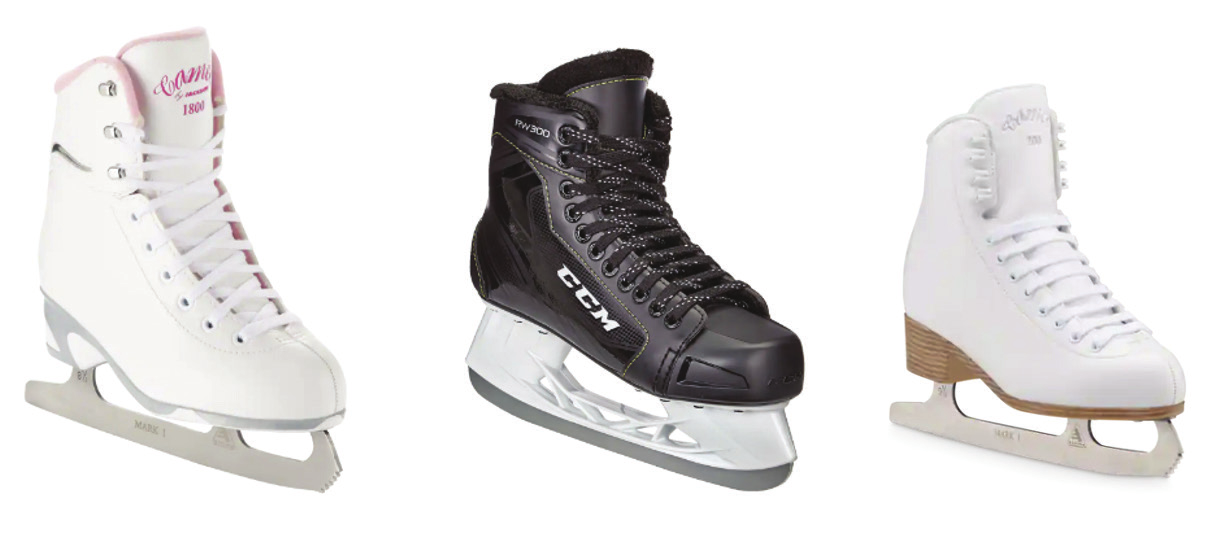
- Figure skates or hockey skates are suitable.
- The heel stays firmly in place; toes lie flat and can move slightly.
- The ankle stays upright when knees bend. Do not buy oversized skates to “grow into.”
- Avoid moulded plastic or buckle skates, double blades, collapsing boots and damaged blades.
- New blades must be professionally sharpened before the first class. Many beginners sharpen again after about 20-30 hours, depending on use.
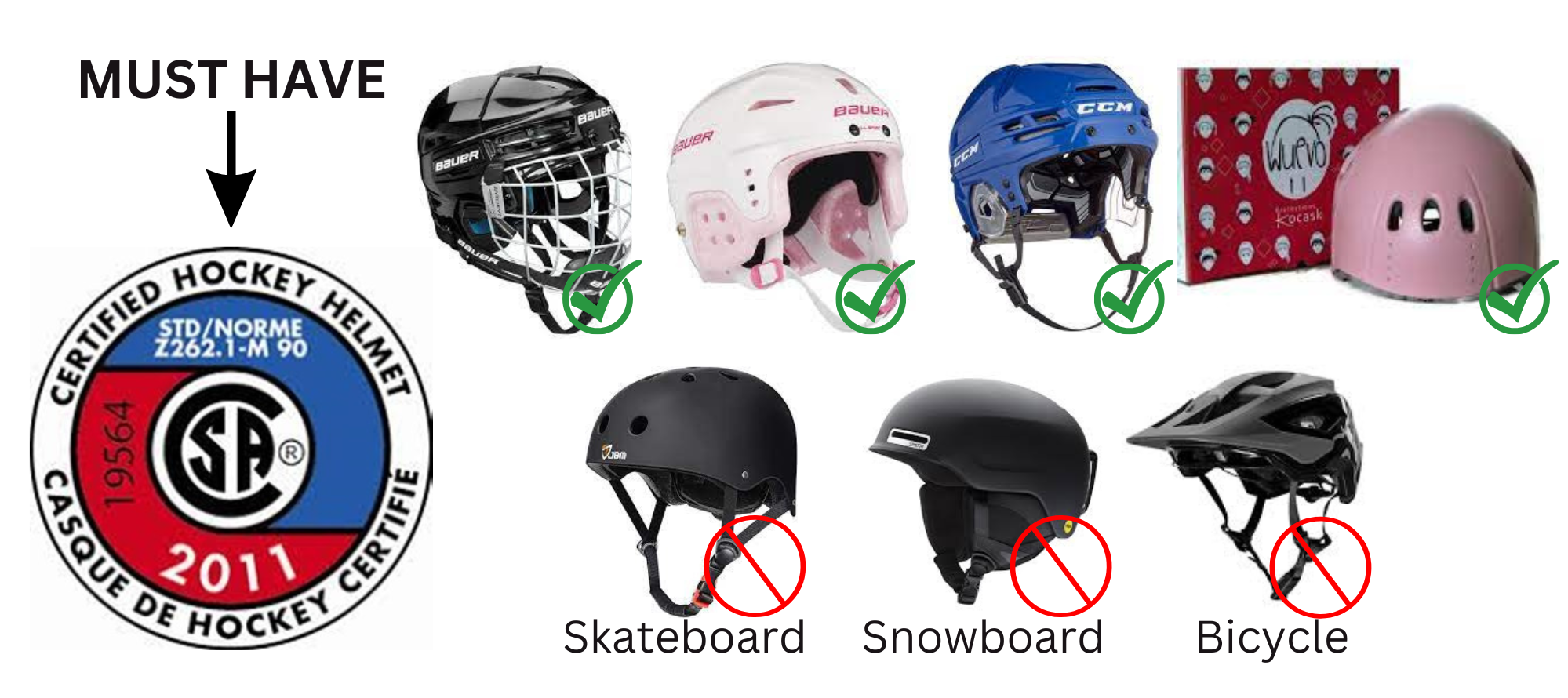
Only a CSA-approved hockey helmet
- Required for all CanSkate and Adult CanSkate participants through Stage 5.
- Also required after Stage 5 until the skater has good forward and backward control, stopping and obstacle navigation.
- The helmet must sit level and snug without rocking, with the chin strap fastened.
- Bike, ski, snowboard, skateboard and general multi-sport helmets are not accepted.
- A face cage is recommended for young Pre-CanSkate beginners, but does not replace the required helmet.
Wear
Warm flexible layers, water-resistant pants, fitted gloves or mittens, and thin socks or tights.
Avoid
Jeans, scarves, loose cords, dangling jewellery, oversized snowsuits, thick socks and bulky headwear under the helmet.
Protect blades
Use hard guards for walking; after class, dry blades and use fabric soakers. Never store blades in hard guards.
Buying and sharpening references
Cyclone Taylor Figure Skating offers figure-skate fitting and custom sharpening at 1005 West 49th Avenue, Vancouver. Cyclone Taylor Source for Sports has locations at 6575 Oak Street, Vancouver, and 14140 Triangle Road, Richmond. Contact the retailer before travelling to confirm current hours, inventory, fitting and sharpening services. These references are provided for convenience and are not club endorsements.
选择现在就合脚、支撑性好的冰鞋
- 花样冰鞋或冰球冰鞋都适合 CanSkate。
- 脚跟应稳稳固定;脚趾能平放并略微活动。
- 屈膝时脚踝保持直立。不要为了“多穿几年”而购买过大的冰鞋。
- 避免塑料模压或卡扣式冰鞋、双刀冰鞋、脚踝处会塌软的鞋,以及损坏的冰刀。
- 新冰刀必须在第一堂课前由专业人员磨好。初学者通常约滑 20-30 小时后再磨,但须视使用情况而定。
只接受 CSA 认证的冰球头盔
- 所有 CanSkate 和 Adult CanSkate 学员,在完成第 5 阶段之前(包括第 5 阶段)都必须佩戴。
- 即使已完成第 5 阶段,如尚未具备良好的前后滑行、刹停和绕障碍能力,仍须佩戴。
- 头盔应水平、贴合、不晃动;每次都要扣好下巴带。
- 自行车、滑雪、单板滑雪、滑板及普通多用途头盔均不符合要求。
- 建议年幼的 Pre-CanSkate 初学者加装合适的面罩,但面罩不能替代规定头盔。
建议穿着
保暖而灵活的分层衣物、防水裤、合手手套或连指手套,以及薄袜或连裤袜。
请避免
牛仔裤、围巾、松散绳带、垂坠饰品、过大的雪服、厚袜,以及头盔下的厚帽子。
保护冰刀
步行时使用硬质护套;课后擦干冰刀并套上布质吸水套。切勿把冰刀长期留在硬质护套内。
购买与磨刀参考
Cyclone Taylor Figure Skating 提供花样冰鞋试穿和专业磨刀服务,地址为 1005 West 49th Avenue, Vancouver。Cyclone Taylor Source for Sports 的 Vancouver 店位于 6575 Oak Street,Richmond 店位于 14140 Triangle Road。出发前请直接向商店确认营业时间、库存、试鞋和磨刀服务。以上资料仅为方便家长查找,并不代表俱乐部作出商业推荐。
03 What to expectClass, coaches and the first two weeks 课堂须知课程、教练与首两周评估
CanSkate Tots
Ages 2-5 · 30 minutes
Introduction for young beginners, covering Pre-CanSkate through Stage 2.
CanSkate
Ages 4-17 · 45 minutes
Stages 1-6 through music, circuits, stations, activities and repeated practice.
The ABCs
How a class moves
Skaters begin with a warm-up and Fast Track, rotate through three lesson stations, use Fast Track between rotations, and finish with a group activity or cool-down. Skate Canada's delivery standard calls for at least 90% movement, so circuits create more practice while coaches observe and correct.
Who supports your skater
Kirsty Richardson
Primary contact for CanSkate program, placement, first-day and progression questions.
Keegan Murphy
Oversees the direction of Connaught Skating Club's skating programs.
Instruction and assessment
Qualified Skate Canada coaches plan circuits, teach standards and assess progress.
Demonstration and flow
Trained, registered club skaters support coaches, nervous beginners and safe group movement.
Grouping and assessment
- Groups are based mainly on ability, with age and group balance also considered.
- Every skater is assigned to a specific group and coach.
- Initial skill and placement assessments take place during the first two weeks; group and coach assignments may change.
- Skaters progress at different rates and may work on skills from more than one stage at once.
Please respect our coaches and parent volunteers
Coaches are responsible for instruction, safety and the progress of many skaters. Parent volunteers give their time to support check-in and session flow. Following directions and communicating courteously help create a safe, positive learning environment for every skater.
CanSkate Tots 幼儿班
2-5 岁 · 30 分钟
为年幼初学者设置,从 Pre-CanSkate 基础延伸至第 2 阶段。
CanSkate
4-17 岁 · 45 分钟
涵盖第 1-6 阶段,通过音乐、循环练习、教学站和活动反复练习。
CanSkate 的 ABC 三大能力
课堂如何进行
学员先进行热身和快速滑行(Fast Track),轮换三个教学站,在轮换间继续快速滑行,最后以集体活动或放松结束。Skate Canada 的课程标准要求至少 90% 的时间保持运动;循环练习能增加有效练习次数,也方便教练观察与纠正。
谁会协助您的孩子
Kirsty Richardson
CanSkate 课程、分组、第一天安排与进阶问题的首要联系人。
Keegan Murphy
统筹康诺特滑冰俱乐部各项滑冰课程的发展方向。
教学与评估
具备资质的 Skate Canada 教练设计课程、教授标准动作并评估进度。
示范与课堂协助
接受过培训并注册的俱乐部学员,协助动作示范、初学者适应及安全分组流动。
分组与评估
- 分组主要按滑冰能力,同时考虑年龄和各组人数平衡。
- 每位学员都会分配到特定小组和指定教练。
- 课程开始后的前两周进行初步技能与分组评估;在此期间,小组或教练安排可能调整。
- 每位学员进度不同,也可能同时练习多个阶段的动作。
请尊重教练与家长志愿者
教练要兼顾多名学员的教学、安全与进步;家长志愿者则利用个人时间协助签到和课堂顺利进行。遵从现场指引并礼貌沟通,能为每位学员共同营造安全、积极的学习环境。
04 Celebrate growthEvaluations, online reports and awards 见证成长评估、网上报告与奖励
CanSkate has six stages. Each stage includes Agility, Balance and Control. Skaters earn area ribbons as required skills are completed and earn the stage badge after all three areas for that stage are complete.
Presented in person during the final class based on the skater's completed evaluation.
Given in fall, winter, spring and summer.
Because the summer term is shorter, there is not enough time for an accurate formal final evaluation. Ribbons and badges are not issued, but goodie bags are still given.
Find and print an online progress report
- Log in to Connaught Uplifter using the same account used to register. Request a password reset if needed. Do not create a new account.
- Click your name in the upper-right corner and choose My Account.
- Choose Participants, then select the skater's name.
- Open Evaluations. Choose an individual evaluation or Evaluations Summarized by Program; use the print icon on the page.
- Open Achievements. Category View shows each CanSkate level's status; List View shows completed Agility, Balance and Control achievements across programs.
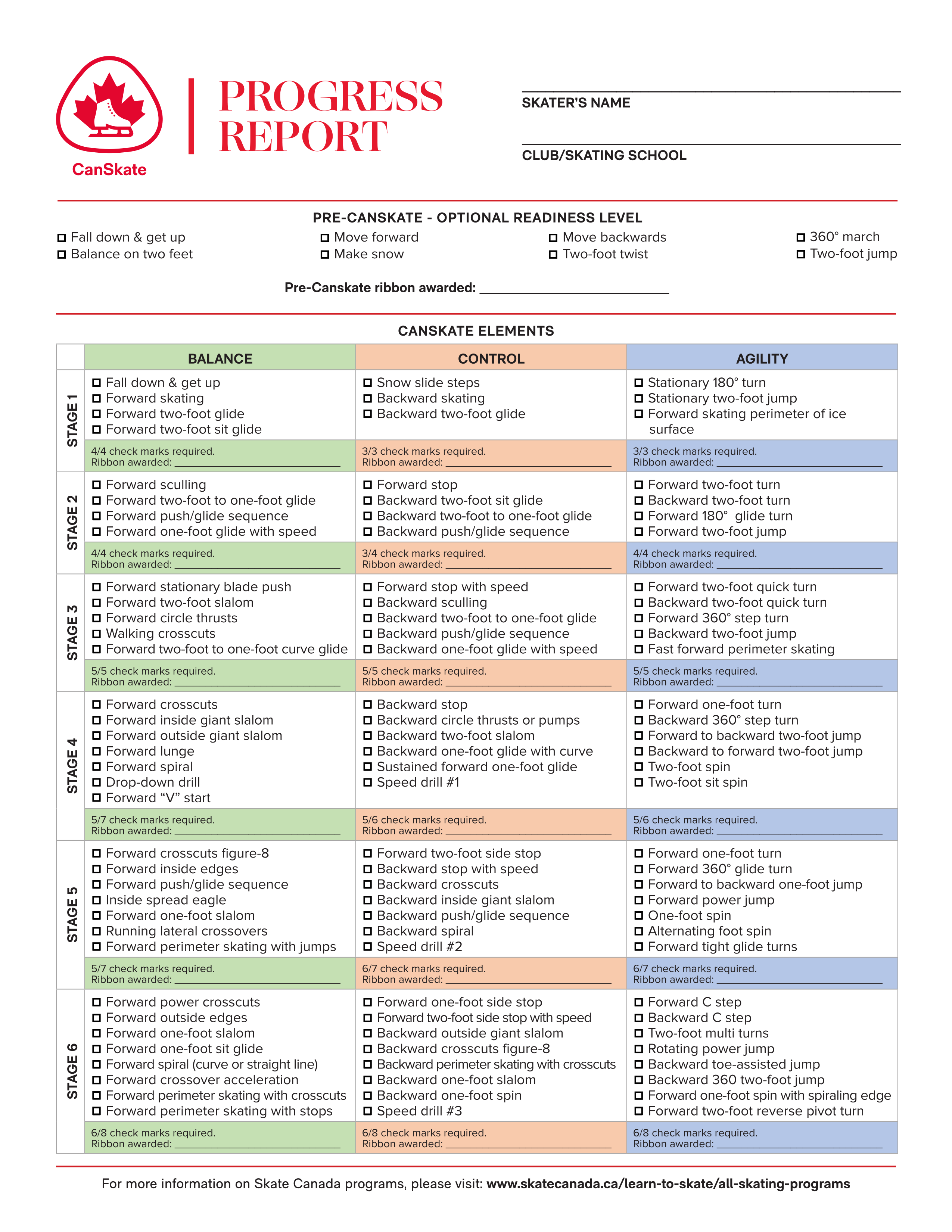
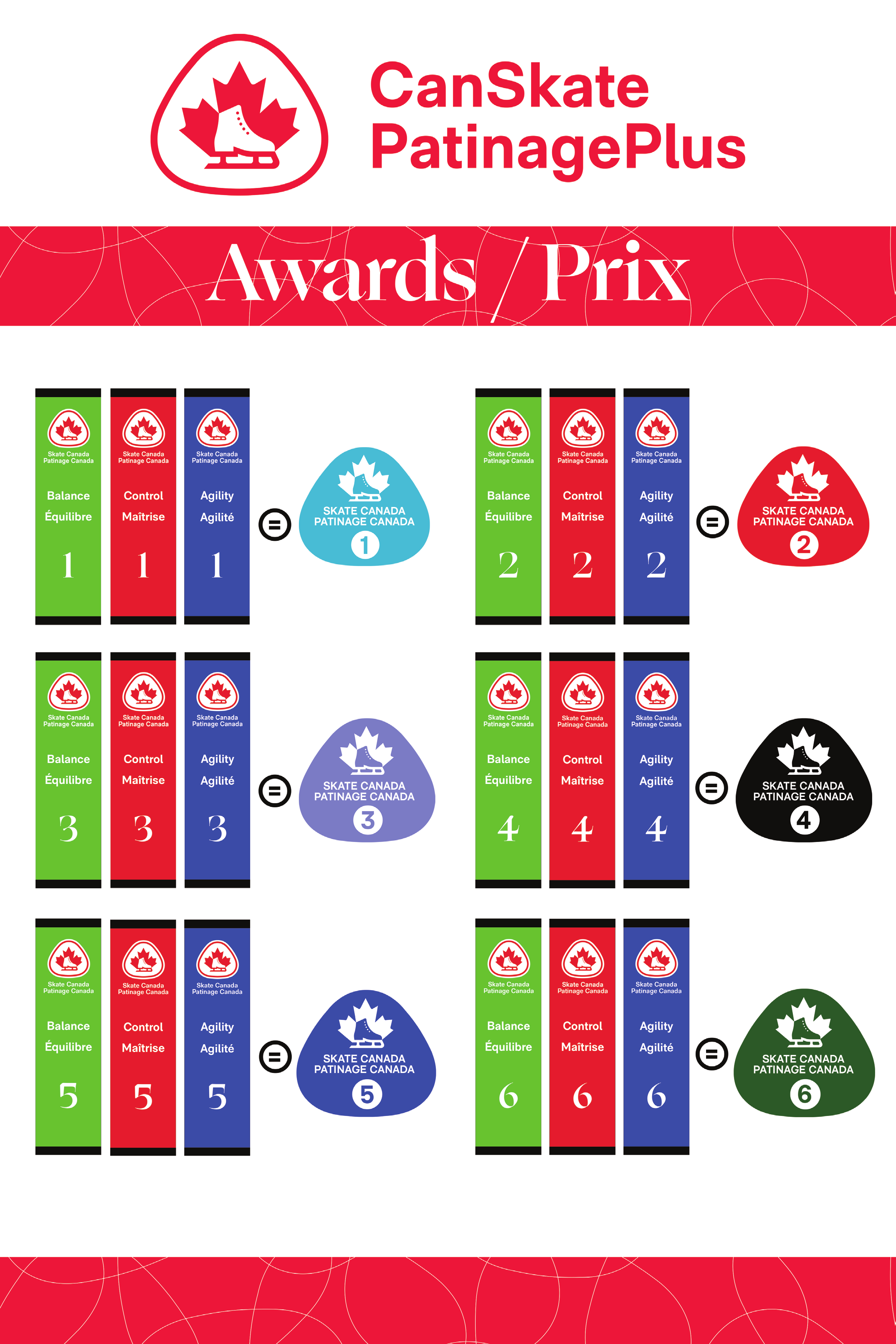
CanSkate 共六个阶段,每个阶段都包括 Agility(灵活性)、Balance(平衡)和 Control(控制)。完成各能力领域的规定动作后可获得相应丝带;同一阶段三个领域全部完成后,才会获得该阶段徽章。
根据已完成的评估,在最后一堂课现场颁发。
秋、冬、春、夏四个学期都会发放。
暑期课程较短,无法完成准确的正式期末评估,因此不颁发丝带或徽章;仍会发放小礼袋。
查看并打印网上进度报告
- 使用报名时的同一账户登录 俱乐部 Uplifter。忘记密码可申请重设;请勿另建新账户。
- 点击右上角您的姓名,选择 My Account。
- 选择 Participants,再点击学员姓名。
- 打开 Evaluations,选择单项评估或 Evaluations Summarized by Program;可使用页面上的打印图标。
- 打开 Achievements。Category View 可查看各 CanSkate 级别状态;List View 可查看不同课程中已完成的 Agility、Balance 和 Control 成就。
05 Follow staff directionsSafety, illness and emergencies 以现场指引为先安全、身体不适与紧急情况
If a skater is injured
Stay off the ice and let the coach assess. Staff will bring the skater to the first-aid area when safe and call the adult. Do not move a suspected head, neck or back injury unless directed by emergency personnel.
Power failure, fire alarm or evacuation
Follow coaches, arena staff and emergency personnel. Do not delay evacuation to remove skates or collect equipment. People come first.
Illness or absence
Keep the skater home when ill or contagious. Missed classes cannot be made up in another registered session unless current club policy provides an exception.
Check the email address connected to registration and the club website before travelling. Schedules can change. Current registration terms, club policies, arena rules and authorized staff instructions take precedence over this guide.
学员受伤
请勿上冰,让教练先评估。情况允许时,工作人员会把学员带到急救区并联系成年人。如怀疑头、颈或背部受伤,除非急救人员指示,否则不要移动学员。
停电、火警或紧急疏散
听从教练、场馆人员及急救人员指引。不要为了脱冰鞋或取装备而延误撤离;人员安全最重要。
生病或缺课
学员生病或具有传染性时请留在家中。缺课不能自动改到其他已报名时段补课,除非俱乐部现行政策另有例外。
出发前,请查看报名账户所使用的电子邮箱和俱乐部官网,因为课表可能变更。如本指南与最新报名条款、俱乐部政策、场馆规定或授权工作人员的现场指示不一致,以后者为准。
06 Parent FAQQuick answers 家长问答常见问题快速解答
My child seems to be in the wrong group.
Speak with Kirsty Richardson away from the active ice doors. Groups are based mainly on ability and may include skaters of different ages or stages.
My child keeps asking to leave the ice.
Help identify the reason: cold hands, uncomfortable skates, fear, fatigue or a bathroom need. A short reset and a simple return goal often help.
Can I take photos or video?
Follow the club's current privacy and publicity policy. Photograph only your own child where possible, respect other families and never use flash near the ice.
Can parents go on the ice?
No. Parents and guardians are not authorized to enter the ice surface. Wait for staff to bring the skater to you.
Can we switch sessions or make up a missed class?
Not automatically. Session changes, cancellations and refunds follow the current registration form and club policies.
When will my child earn a badge?
Assessment happens during regular classes. A skater earns Agility, Balance and Control ribbons, then the stage badge after completing all three areas for that stage.
我觉得孩子被分错组了,怎么办?
请在远离冰场出入口的位置与 Kirsty Richardson 沟通。分组主要依据能力,因此同组学员可能年龄或阶段不同。
孩子一直想离开冰面,怎么办?
先协助找出原因:手冷、冰鞋不舒服、害怕、疲倦或需要上厕所。短暂休息并设定一个简单的返回目标,通常会有帮助。
可以拍照或录像吗?
请遵守俱乐部最新隐私及影像政策。尽量只拍自己的孩子,尊重其他家庭,并且不要在冰场附近使用闪光灯。
家长可以上冰吗?
不可以。家长和监护人没有进入冰面的授权;请等工作人员把学员带到您身边。
可以换时段或补缺课吗?
不能自动更换。时段调整、取消与退款均以最新报名表和俱乐部政策为准。
孩子什么时候能获得徽章?
评估会在正常课堂中进行。学员先分别获得 Agility、Balance 和 Control 丝带;同一阶段三个领域全部完成后,才获得该阶段徽章。
Keep this handy
Questions, feedback and current information
For CanSkate program inquiries, placement, first-day questions or feedback, contact the CanSkate Coordinator:
connaught.canskate@gmail.comWe work hard to maintain a high-quality program, and your feedback is important. You may also share suggestions with the parent volunteers at the CanSkate table.
建议收藏
咨询、反馈与最新信息
如有 CanSkate 课程、分组、第一天安排或改进建议,请联系 CanSkate 课程负责人:
connaught.canskate@gmail.com我们一直努力维持高质量课程,也非常重视您的反馈。您还可以把建议告诉 CanSkate 服务台的家长志愿者。